
Summer Mountain Safety, Conduct & Trail Status
At Marquette Mountain Resort, safety remains our top priority even when operations are paused. To protect our mountain ecosystem, ensure a secure environment for our maintenance crews, and prepare for future seasons, we require all visitors to respect our current closures.
For educational purposes and future trip planning, our standard summer safety guidelines, trail classifications, and rider conduct policies are detailed below.
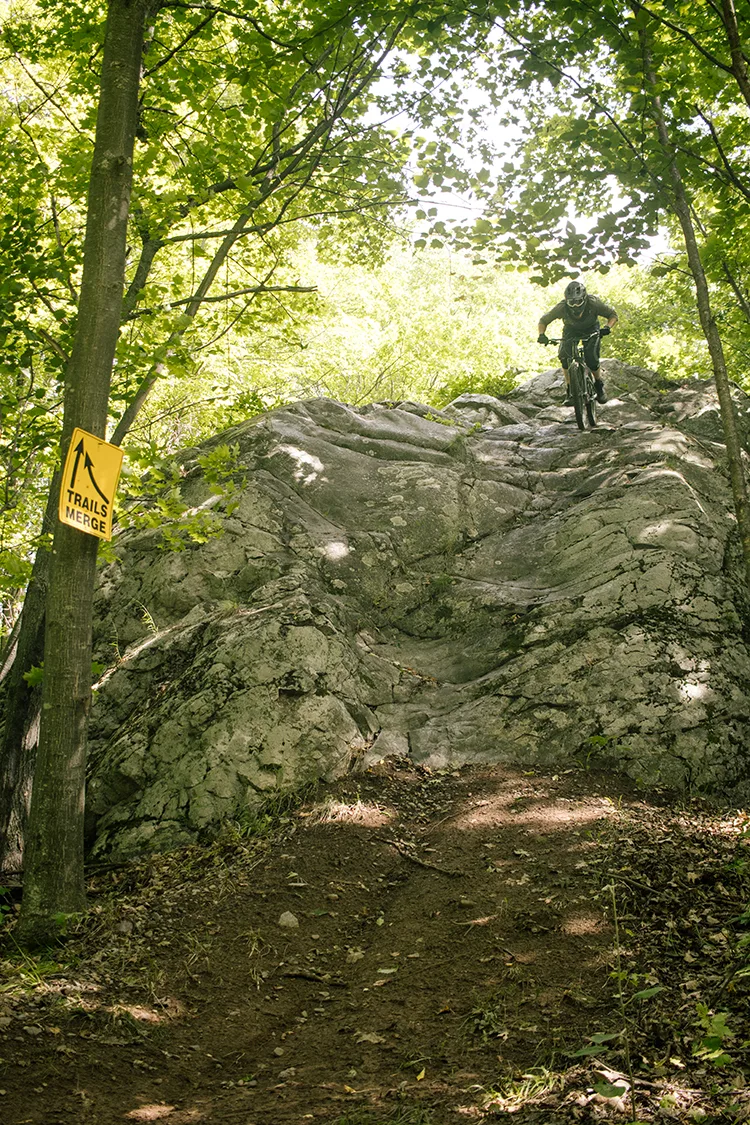
The Mountain Biker’s Responsibility Code
The official Mountain Biker’s Responsibility Code consists of 10 safety rules developed by the National Ski Areas Association (NSAA) to reduce risk and protect riders on the mountain:
- Stay in control. You’re responsible for avoiding objects and people.
- Know Your Limits. Ride within your ability. Start small and work your way up.
- Protect Yourself. Use an appropriate bike, helmet, and protective equipment.
- Inspect and Maintain Your Equipment. Know your components and their operation prior to riding.
- Be Lift Smart. Know how to load, ride, and unload lifts safely. Ask if you need help.
- Inspect the Trails and Features. Conditions change constantly; plan and adjust your riding accordingly.
- Obey Signs and Warnings. Stay on marked trails only. Keep off closed trails and features. Ride in the direction indicated.
- Be Visible. Do not stop where you obstruct a trail, feature, landing, or are not visible.
- Look and Yield to Others. Look both ways and yield when entering or crossing a road or trail. When overtaking, use caution and yield to those ahead.
- Cooperate. If involved in or witness to an incident, identify yourself to staff.
Note: Mountain biking involves the risk of serious injury. Adhering to the NSAA summer safety code ensures a safer environment for everyone once trails reopen.
Trail Signs & Classifications
Understanding trail signage is critical for a safe ride. Similar to our winter slopes, Marquette Mountain’s summer trails use a standard classification system to indicate difficulty. Always check out the path and features before you ride them.
Green Circle
Easier
Blue Square
More Difficult
Black Diamond
Most Difficult
Double-Black Diamond
Extremely Difficult, Use Extra Caution
Technical Trails
Technical Trails are typically narrow and include features naturally found on the mountain’s terrain, such as roots, rocks, gravel, logs, water crossings, drops, and jumps. They may also include man-made elements like bridges.

Freeride Trails
Freeride Trails are generally wider than Technical Trails and feature constructed or modified terrain such as jumps, berms, banks, drops, and bridges made from dirt or wood. These trails are identified by an orange oval containing the difficulty symbol.

Pro-Line & Expert Trails
Beyond Expert or Professional-Level Trails are those requiring professional competition-level skills. Before using these trails, riders may be required to sign specific releases or attend mandatory training.
Skill Development Areas
Skills Parks are designed to provide riders the opportunity to learn and develop new skills away from the main trail environment. It is always the rider’s responsibility to inspect trails and features before attempting them.

Chair Lift Safety & Helmet Use
Safety on the mountain extends from the base to the summit.